




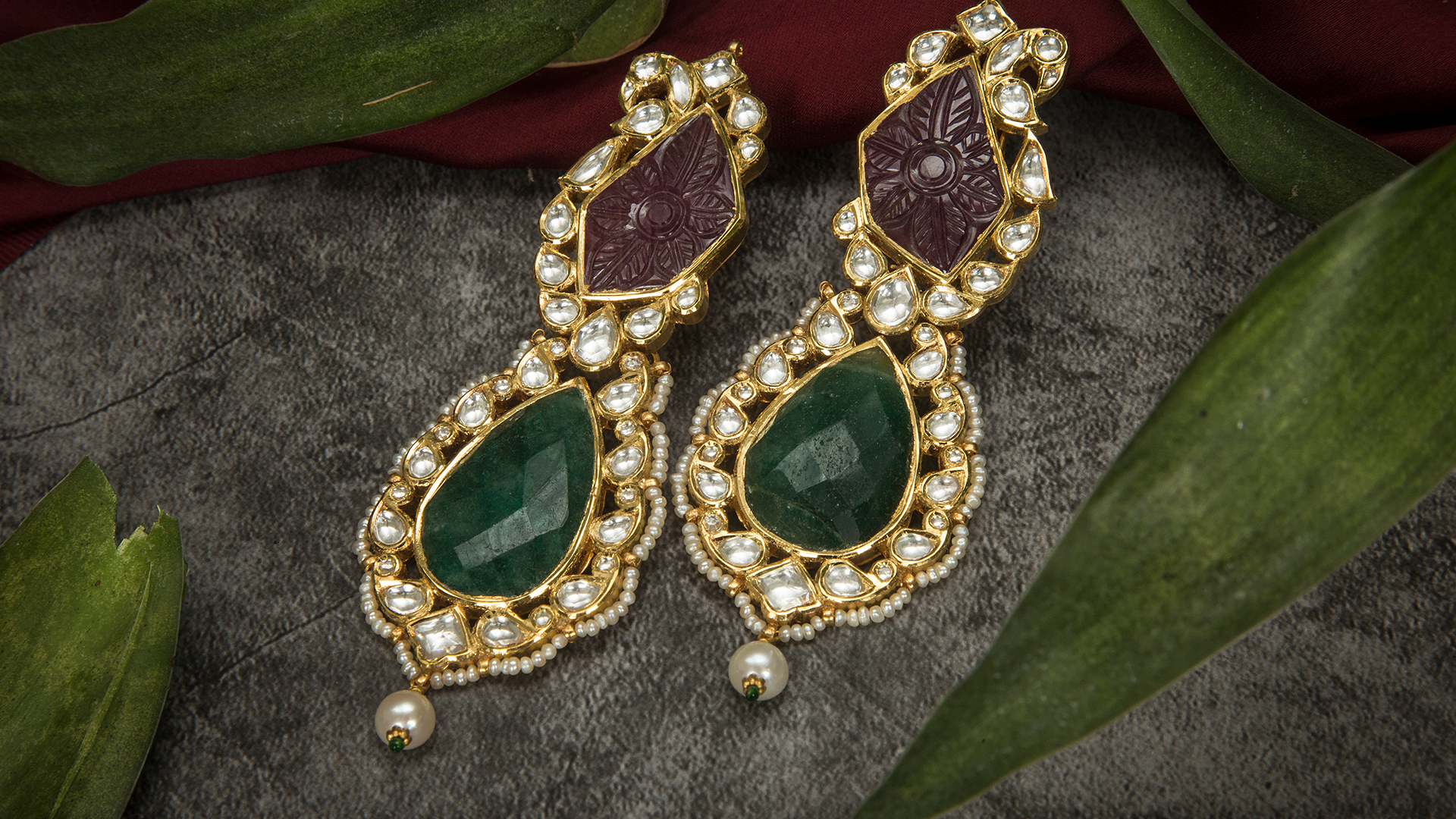
Gems- Heated, Dyed, and Glass-filled
Gemstones like Rubies, Emeralds, and Sapphires are precious due to their rarity, durability, and hardness. These gems sometimes are even more expensive than diamonds!
These gems have complex mixtures of metals, giving them their color.
In this blog, we would like to explain the differences between natural and Treated Gemstones.
You may like to know why we have to understand the difference; why bother gaining knowledge even if there is a slight difference? As jewelers, we always want to give our clients the best and most authentic product, and we believe in sharing our knowledge with you to provide you with a basic understanding. We believe in knowledge's power and would love to share it with you.
The Processes of Gemstones
Heat Treatment- The gemstones are heated under 8 to 2000 degrees Celsius for varying lengths, ranging from several minutes to weeks, to enhance the stone's color.
Glass-filled Treatment- In this method, lead is melted and filled in cracks or fissures to increase durability and enhance the inferior quality of the stone.
Dyed Treatment- Dyeing is one of the oldest treatments recorded. The treatment involves the introduction of a coloring agent into a gemstone to give it a new color, intensify an existing color or improve color uniformity.
How to Know the Difference between Real, Glass-filled, Dyed, and Heated Gems?
Sapphire- Take a magnifying glass and try to find inclusions and blemishes; if there are none, they are not real. You can even do a fog test by exhaling on the stone; if the fog does not disappear in seconds, then the stone is not natural; it may either be low quality or fake. If you want to know if they are glass-filled, check for air bubbles in them; if they are present, you know what it means!
Rubies- Do a scratch test to understand whether Rubies are real or fake. Rub one coin on the stone, and if there is a mark, there is a chance of the ruby being
fake! Gently scratch the rock against a hard, smooth surface: porcelain tile or a piece of clear glass. The stone should mark the surface whether or not it is a "ruby." The tip-off, however, comes if the "ruby" leaves a red mark on the surface where you scratched it. The stone is not as pure if it leaves a red stain.
Emeralds- Check the stone to understand whether the Rubies are real or fake. They are authentic if you see any crystals or inclusion in them. If the gemstone is entirely plain, it is either synthetic or unnatural. Sometimes the gems are filled with glass to check whether it is glass-filled; look for bubbles in a group or a cluster. If you spot them, then they are fake. Natural emeralds have gas bubbles but are not in the same place. You might spot a few scattered within the stone. Emeralds also have a natural shine and luster, unlike other gems of the same color.
Emeralds, Rubies, and Sapphires are processed (dyed) by putting the respective color agents of the gems to enhance their colors. To understand whether they are dyed, check the color density and the thickness of the stone. If they are darker than their original colors, the gems are dyed. The best way is to get it certified in a laboratory.
Although stated that these gems undergo these processes to make the gemstone stronger, in reality, it is not true as, in time, they will lose their durability and luster. These processes are only helpful when they are in their natural environment, that is when they are within rocks. But once mined, these artificial treatments will decrease the stone's value.