




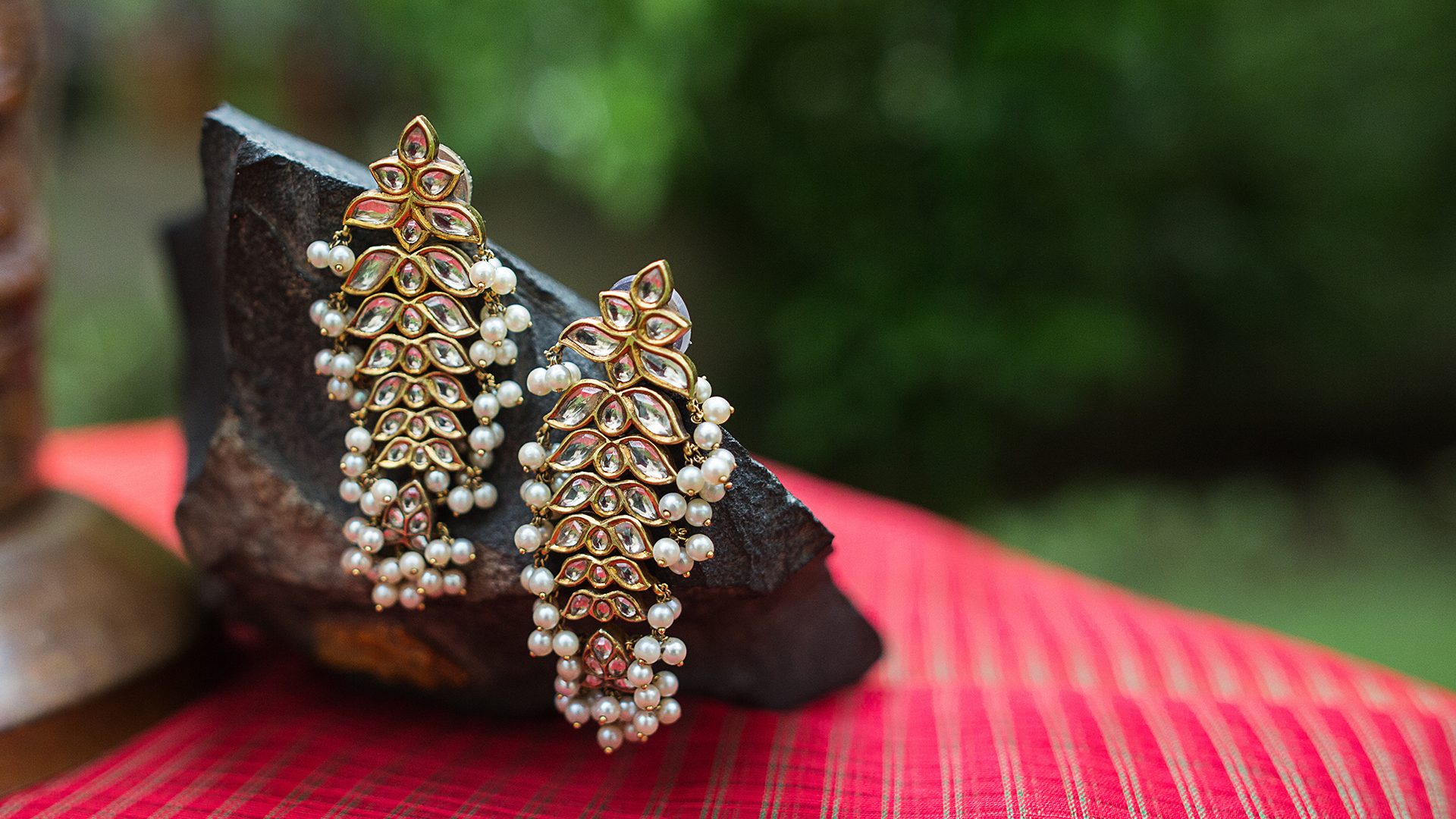
Differences between Jadtar, Kundan, Polki, and Vilandi
Pieces of Jewelry are Enchanting, Magnificent, and Enthralling for the eyesight; they can transport you to a visual world, elaborating a story.
We love high-quality Jewelry pieces, but do we know the differences between their types and processes? Here we distinguish and explain to you the creative process.
Jadtar
People are under the impression that Jadtar is the stone embedded in the Jewelry, but Jadtar is the process of implanting stones in the frame of the Jewelry. The method involves setting stones, diamonds, and other materials within the Gold frame. The word “Jad” literally translates to being embedded.
Artisans do not use adhesives but their tools to set the stones. This process of setting stones is called “Khudaayi.”
Kundan
Kundan was brought to India by the Mughals many Centuries ago. Then later, this technique was patronized by the Royal Families in Rajasthan, and the craftsmanship developed there and continues to be. What is Kundan? It is not a type of Jewelry but the material used in embedding stones into the frame. Kundan is the gold strip used in setting the stones. Gold is beaten into thin strips; these strips are used to mount the gemstones onto the Gold frame, also known as “Ghat.” After the stones are embedded, the craftsman does the finishing work known as “Chillai.”
Polki
Polkis are natural, unfinished diamonds in their raw, natural form. It’s the oldest form of diamond in India and the rest of the world. Polkis have polished surfaces, so no two diamonds are ever of the same structure. Because of their purity, Polki Jewelry is quite expensive.
Vilandi
Vilandi is the same as Polki, but a different name is used for everyday language.
The differences may look minute, but in reality, they are huge. Understanding the processes and types is beneficial as it helps make the buying process easier, and there is nothing more significant than gaining new Knowledge!